


The Redesigned 2027 Kia Telluride Hybrid: Real-World Florida Commuting vs. The Brochure
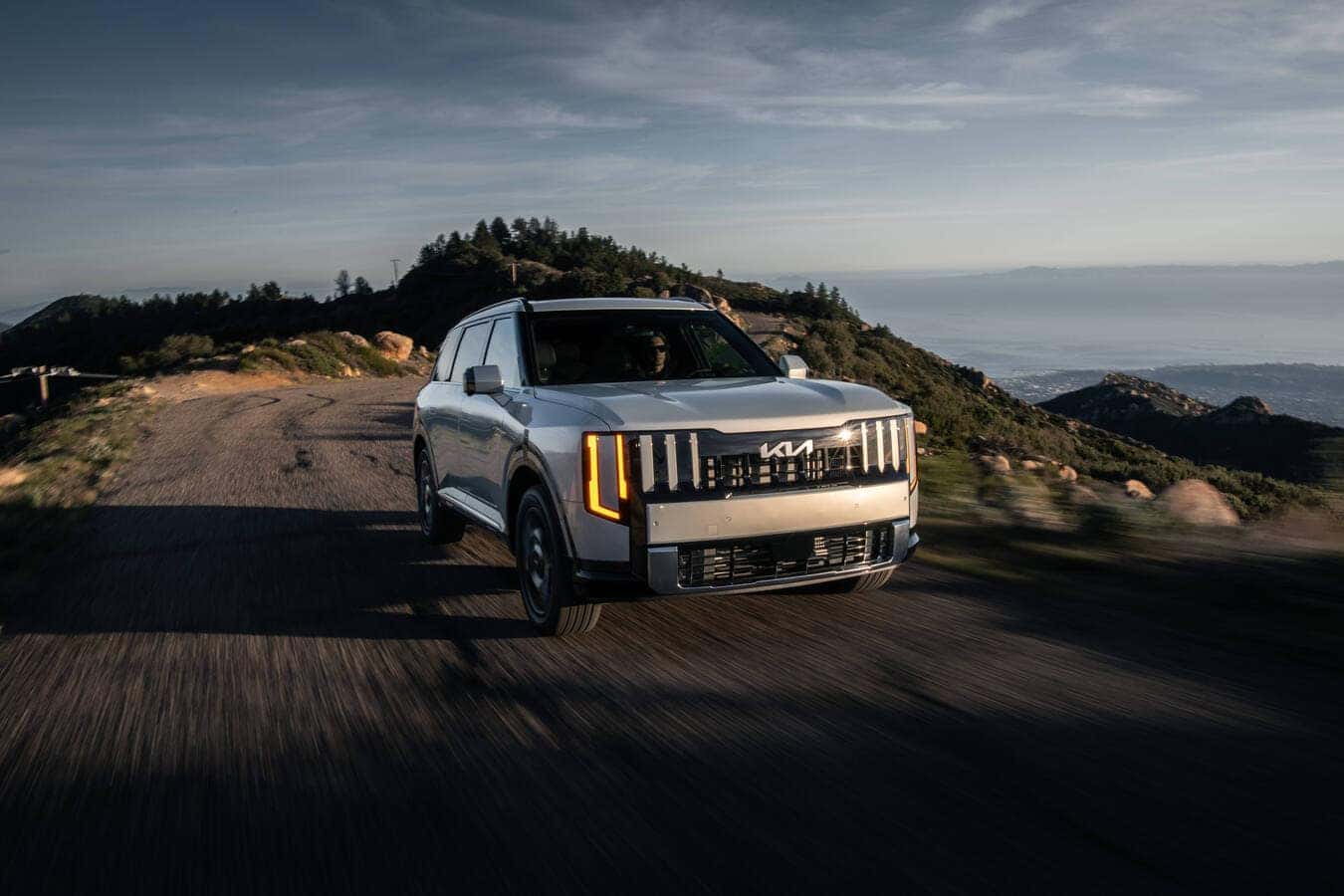
The three-row SUV segment is one of the most hotly contested spaces in the North American automotive market. Since its debut, the Kia Telluride has sat at the pinnacle of this class, winning consecutive awards and capturing the attention of suburban families. However, as environmental regulations tighten and fuel costs fluctuate , the demand for electrified family haulers has surged.
For the 2027 model year, Kia has fundamentally rewritten the Telluride’s narrative. The celebrated 3.8-liter naturally aspirated V6 engine has been retired, replaced by a cutting-edge, high-output turbocharged hybrid powertrain. This represents a major evolution, but it also introduces a significant gap between the glossy marketing materials and the physical realities of navigating the high-speed corridors, toll roads, and extreme seasonal heat of Central Florida.
This comprehensive, highly detailed guide deconstructs the engineering, real-world efficiency, localized commuter dynamics, and financial realities of the 2027 Kia Telluride Hybrid, positioning Greenway Kia North in Longwood as the definitive local authority on this vehicle.
1. Powertrain Architecture: Deconstructing the Specs
Unlike traditional hybrids that prioritize absolute fuel economy over performance, the 2027 Kia Telluride Hybrid utilizes an advanced, high-performance parallel hybrid system shared with its corporate sibling, the redesigned Hyundai Palisade Hybrid.
The Combustion Component
At the heart of the system is a 2.5-liter turbocharged and intercooled double overhead cam (DOHC) 16-valve inline-four gasoline engine. On its own, this highly efficient forced-induction engine generates 258 horsepower and 260 lb-ft of torque. It features a fast-acting twin-scroll turbocharger to minimize lag and maximize low-end torque.
The Electric Propulsion
The combustion engine is paired with two permanent-magnet synchronous AC traction motors:
- Motor 1 (Starter-Generator): Rated at 17 horsepower and 75 lb-ft of torque, primarily responsible for seamless engine start/stop cycles and capturing regenerative energy.
- Motor 2 (Main Drive Motor): Rated at 72 horsepower and 199 lb-ft of torque, integrated directly between the engine and the transmission to provide instant torque fill and pure-electric driving capability under light loads.
Combined System Output & Transmission
When operating in unison, the combined system output reaches a formidable 329 horsepower and 339 lb-ft of torque, drawing energy from a compact lithium-ion battery pack. This combined output makes the hybrid variant significantly more powerful than the outgoing V6 model and the new standard 274-horsepower non-hybrid turbocharged 2.5-liter engine.
Power is routed through a traditional six-speed automatic transmission rather than a continuously variable transmission (eCVT). This maintains a natural, linear shifting feel under acceleration, executing a 0–60 mph sprint in just 6.4 seconds. Front-wheel drive (FWD) is standard, while Kia’s advanced torque-vectoring All-Wheel Drive (AWD) with a lockable center differential and dedicated Multi-Terrain Modes (Snow, Mud, Sand) is optional.
2. Dimensions, Space, and Physical Footprint
To accommodate the hybrid battery pack and satisfy family demands for increased utility, Kia has stretched the Telluride’s physical footprint. The wheelbase has been extended by 2.7 inches to 116.9 inches, and the overall length has grown by 2.3 inches to 199.2 inches.
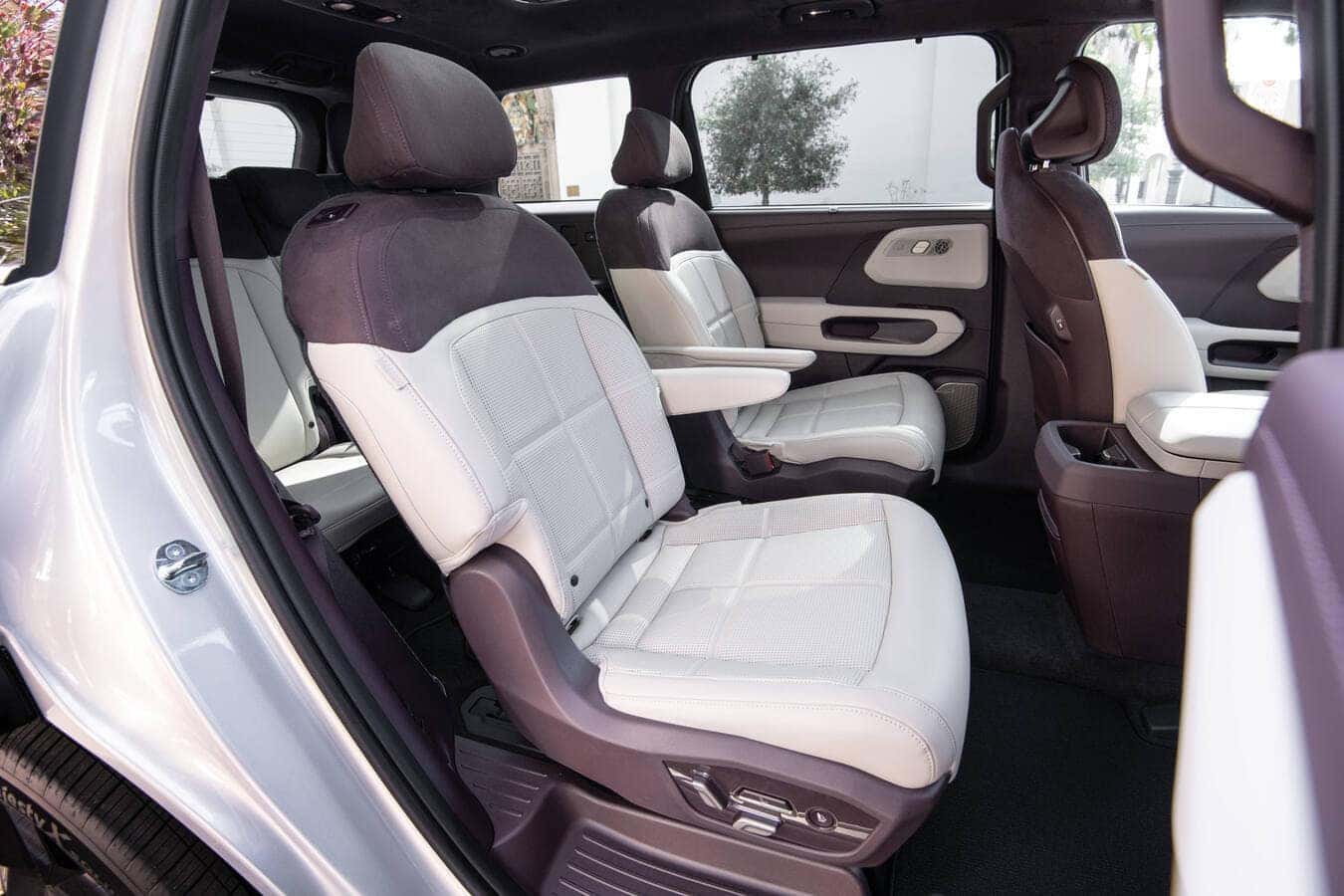
Table 1: Physical Dimensions and Cargo Capacities
| Metric | 2027 Telluride Hybrid Specs | Change vs. Outgoing Generation |
|---|---|---|
| Wheelbase | 116.9 inches | +2.7 inches |
| Overall Length | 199.2 inches | +2.3 inches |
| Width | 78.3 inches | Unchanged |
| Height | 69.9 inches | +1.0 inch |
| Curb Weight (AWD SX-Prestige) | 5,047 lbs | +560 lbs (approx.) |
| Cargo Volume (Behind 3rd Row) | 21.0 cubic feet | +3.0 cubic feet |
| Cargo Volume (Behind 2nd Row) | 48.0 cubic feet | +2.0 cubic feet |
| Max Cargo Volume (Seats Folded) | 86.9 cubic feet | +2.1 cubic feet |
| Ground Clearance (Standard/X-Pro) | 8.0 inches / 9.1 inches | +0.0 / +0.7 inches |
The interior volume expansion is immediately noticeable in the third row, which features increased legroom and newly available heated outboard seats specifically on the hybrid trims. Despite the added battery pack, cargo capacity has actually increased across all configurations, reaching a maximum of 86.9 cubic feet with the second and third rows folded flat.
3. Real-World Fuel Economy vs. The Brochure
The most critical gap that prospective Central Florida buyers must understand is the difference between EPA-estimated fuel economy and real-world highway efficiency under local driving conditions.
The promotional materials highlight highly impressive numbers:
- FWD EX Model: Rated by the EPA at 34 mpg city, 36 mpg highway, and 35 mpg combined.
- FWD SX Model: Rated at 32 mpg city, 34 mpg highway, and 33 mpg combined.
- AWD Models (All Trims): Rated at 30 mpg city, 32 mpg highway, and 31 mpg combined.
However, independent real-world testing paints a different picture. On a standardized 75-mph highway fuel-economy test, the all-wheel-drive 2027 Kia Telluride Hybrid achieved a real-world result of 28 mpg. During mixed daily driving, the observed fuel economy averaged 25 mpg.
The Physics of High-Speed Florida Driving
The discrepancy between the 32-mpg highway rating and the 28-mpg real-world test is explained by the physics of aerodynamic drag. The aerodynamic drag force ($F_d$) opposing a vehicle is expressed by the quadratic drag equation:
$F_d=\frac{1}{2}\rho v^2C_dA$
Where:
- $\rho$ represents the density of the air.
- $v$ is the velocity of the vehicle.
- $C_d$ is the vehicle’s aerodynamic drag coefficient.
- $A$ is the frontal surface area of the vehicle.
Because the drag force scales quadratically with velocity ($v^2$), the power required to overcome this drag ($P_d$) scales cubically with velocity:
$P_d=F_d\cdot v=\frac{1}{2}\rho v^3C_dA$
The Telluride is a large three-row SUV with a substantial frontal area ($A$) and a tall, blocky profile. When driving on Central Florida’s high-speed corridors—such as the GreenWay (SR-417), the Beachline Expressway (SR-528), or I-4—traffic flows at 75 to 80 mph. At 75 mph, a vehicle must overcome nearly double the aerodynamic drag force it encounters at 55 mph.
To maintain these speeds, the Telluride’s 2.5-liter turbocharged engine must remain under constant boost. At this high, steady load, the electric drive motors cannot provide pure-electric cruising, transforming the vehicle into a standard forced-induction gasoline engine fighting massive wind resistance. This drops fuel economy to 28 mpg on high-speed runs.
The Thermodynamic Penalty of Florida Summers
Further impacting summer fuel economy is the extreme load placed on the vehicle’s electrical system by the tri-zone climate control. In a traditional internal-combustion vehicle, the air conditioning compressor is driven mechanically by an accessory belt off the engine. In the Telluride Hybrid, the AC compressor is fully electric, powered directly by the high-voltage hybrid battery pack.
In temperatures exceeding 95°F, cooling the Telluride’s massive passenger cabin requires 3 to 5 kW of continuous electrical power during the initial “pull-down” phase, tapering to approximately 1 kW to maintain a target of 72°F. This continuous draw rapidly depletes the lithium-ion hybrid battery pack. Consequently, the hybrid computer must run the gasoline engine more frequently—even when idling or in slow traffic—strictly to act as a generator to recharge the battery. This thermodynamic penalty further erodes fuel economy during the hot summer months.
4. Local Commuter Dynamics: Mapping Seminole County
The efficiency and driving experience of the 2027 Telluride Hybrid are highly dependent on the commuter routes of Seminole County.
Commute A: The I-4 Corridor (Sanford/Lake Mary to Downtown Orlando)
This 20-mile commute represents a mix of high-speed cruising and severe, stop-and-go congestion, particularly near the Altamonte Springs (SR-436) and Maitland interchanges.
- Hybrid Behavior: This route is the ideal use case for the Telluride Hybrid. During gridlock, the vehicle operates primarily in electric mode. Every time the driver brakes, the 72-hp electric motor acts as a generator, capturing kinetic energy and storing it back in the battery. The engine remains off while idling, preventing fuel waste.
- Commuter Outcome: Drivers can expect to average 31 to 33 mpg on this route, making it highly efficient.
Commute B: The SR-417 GreeneWay Toll Run (Oviedo to Lake Mary)
A 15-mile commute characterized by free-flowing toll roads with a speed limit of 70 mph, where actual travel speeds hover around 75 to 80 mph.
- Hybrid Behavior: In this high-speed environment, the electric motor acts primarily as a minor power assistant for overtaking. The regenerative braking opportunities are minimal, and the turbocharged engine is under constant load to maintain speed against aerodynamic drag.
- Commuter Outcome: Fuel economy will drop to 27 to 28 mpg.
Suburban Chores (Winter Springs and Longwood Local Driving)
Short trips along Tuscawilla Road or Lake Mary Boulevard for school drop-offs and errands.
- Hybrid Behavior: The low speeds (30–45 mph) and frequent stop signs allow the hybrid system to maximize its electric-only driving mode.
- Commuter Outcome: Fuel economy remains excellent, consistently hovering between 32 and 35 mpg.
Navigating Local Wireless Interference: The I-4 “Kia Center” Disconnect
A specific, highly frustrating local technical issue for Central Florida commuters is the sudden dropping or freezing of wireless Apple CarPlay and Android Auto projection systems. This consistently occurs on the I-4 and SR-408 flyover directly adjacent to the downtown Kia Center.
The root cause of this failure is intense Radio Frequency Interference (RFI). To support massive crowds, the stadium has integrated high-density millimeter-wave (mmWave) 5G antennas onto its exterior. When a commuter’s vehicle passes, the driver’s smartphone attempts an aggressive cell handoff to these high-frequency bands. This transition temporarily saturates the phone’s wireless transceiver, interrupting the 5GHz Wi-Fi channel that maintains the wireless link between the phone and the Kia’s infotainment unit.
The Definitive Local Troubleshooting Guide:
To resolve this localized issue, Greenway Kia North recommends the following steps:
- Disable Wireless Networks temporarily: In the iPhone’s cellular settings, turn off “WIFI Ask to Join” and disable “Personal Hotspot” to prevent the phone from constantly searching local network handoffs.
- Limit Location Services: Restrict background location access on non-essential, high-bandwidth apps (such as Amazon Alexa) to “While Using the App”.
- Firmware Updates: Ensure the vehicle’s infotainment system has received the latest software update, which stabilizes the Wi-Fi receiver.
- Transition to Hardwire: Connect the smartphone directly to the vehicle’s USB-C port using a high-quality, data-certified physical cable. A hardwired connection completely bypasses the localized mmWave wireless interference, ensuring uninterrupted navigation at critical highway interchanges.
- Pinhole Reset: If the screen freezes entirely, insert a small tool into the physical pinhole reboot switch located directly next to the volume knob to force-restart the system without losing saved settings.
5. Regional Dealership Fee & Transparency Audit
Florida has some of the highest dealership fees and least transparent auto-purchasing markets in the country due to the lack of a statutory cap on documentation and dealer prep fees. To help local buyers cut through the marketing noise, we conducted a transparent audit of area dealerships specifically for the 2027 Kia Telluride Hybrid.
Table 2: Area Dealership Fee and Transparency Audit (Spring 2026)
| Dealership | Base Dealer / Doc Fee | Pre-Installed Surcharges (Mandatory Add-ons) | Real Transaction Surcharge Above MSRP | CarEdge Transparency Score & Grade | Retail Practice Audit |
|---|---|---|---|---|---|
| Greenway Kia North | $399.00 | $0.00 (Optional Only) | $399.00 | Grade A (91/100) | No hidden markups; non-mandatory accessories average $765 if chosen. |
| Greenway Kia East | $399.00 | +$1,420.00 (Average Protection Package) | $1,670.00 | Grade B (86.2/100) | Low base doc fee, but routinely adds pre-installed accessory packages. |
| City Kia (Orlando) | $999.00 | +$2,995.00 (City Care Benefits) | $3,994.00 | Grade B (81.2/100) | High baseline fees; combines doc fee, e-filing, and tag fees up front. |
| Deland Kia | $1,199.00 | +$1,295.00 (Appearance Package) | $2,494.00 | Grade B (89.8/100) | Baseline fee is $228 above state average; adds mandatory packages on new arrivals. |
Deconstructive Analysis of Competitor Pricing:
- DeLand Kia: When purchasing a 2027 Telluride Hybrid EX at DeLand Kia, the transaction starts with an MSRP of $48,900. However, the dealer tacks on a $1,295 Appearance Package, a $599 e-Filing Fee, and an inflated $1,199 Dealer Fee, bringing the actual selling price to $51,993 before state sales tax and tag registration. The $1,199 doc fee is pure dealer profit, sitting $228 above the Florida state average of $971.
- Greenway Kia East: While their baseline doc fee of $250 is highly competitive, our audit reveals they routinely include pre-installed dealer add-ons averaging $1,420. In multiple documented cases, salespeople presented “adjusted pricing” showing a large internet discount, only to add back a $4,998 dealer addendum on paper, steering the conversation toward monthly payments to hide the final out-the-door cost.
- Greenway Kia North (The Longwood Standard): Our Longwood facility has established a transparent purchasing model. Greenway Kia North earned an exceptional Grade A (91/100) Transparency Score on CarEdge. We charge a fair, upfront $399 doc fee (which is $573 *below* the Florida state average) and do not force mandatory protection packages onto our quotes. Non-mandatory accessories (such as paint protection or nitrogen tire fills) average only $765 and are completely removable at the buyer’s request.
6. Total Cost of Ownership: Seminole County Insurance Risk Analysis
Prospective Telluride buyers must look beyond the monthly auto loan payment and calculate their localized insurance exposure. Florida is one of the most expensive auto insurance markets in the nation, driven by high population density, weather risks, and litigation costs.
The average annual cost of car insurance in Florida is approximately $3,884 for full coverage ($324 per month) and $1,056 for minimum coverage ($88 per month). Nationally, the Kia Telluride costs an average of $195 per month ($2,340 annually) to insure , but Central Florida ZIP codes demand a substantial premium.
Table 3: Localized Monthly Insurance Premium Estimates (2027 Telluride Hybrid)
| City | Average Monthly Liability Only | Average Monthly Full Coverage | Key Regional Risk Factors |
|---|---|---|---|
| Sanford | $129.00 | $217.00 | High daily commuter traffic and merging hazards on the I-4 corridor. |
| Winter Springs | $117.00 | $212.00 | Safer suburban road layouts result in the lowest baseline claims history in the county. |
| Oviedo | $118.00 | $235.00 | Multi-row family SUVs face higher passenger liability exposure in school zones. |
| Altamonte Springs | $142.00 | $237.00 | Heavy commercial retail traffic on SR-436 correlates to a higher frequency of minor collisions. |
Underwriter Selection and “Kia Boyz” Legacy Pricing
While the 2027 Telluride Hybrid features a factory-installed electronic engine immobilizer and is physically immune to the legacy “Kia Boyz” USB-theft vulnerability , insurance carriers continue to apply brand-wide risk surcharges in high-density areas of Central Florida.
According to Quadrant Information Services and Compare.com rate filings, USAA and State Farm consistently offer the most competitive premium quotes for the Kia Telluride, averaging $80 to $89 per month for drivers with pristine records. Conversely, Farmers and Allstate apply significant surcharges, with full-coverage quotes reaching $342 to $353 per month. Buyers must obtain carrier-specific, VIN-specific insurance quotes prior to finalizing their purchase.
7. Head-to-Head Comparison: Telluride Hybrid vs. Telluride Gas vs. Toyota Highlander Hybrid
For families cross-shopping three-row utility vehicles, the decision typically comes down to three choices: the new Telluride Hybrid, the standard Telluride Gas Turbo, or the segment’s legacy hybrid, the Toyota Highlander Hybrid.
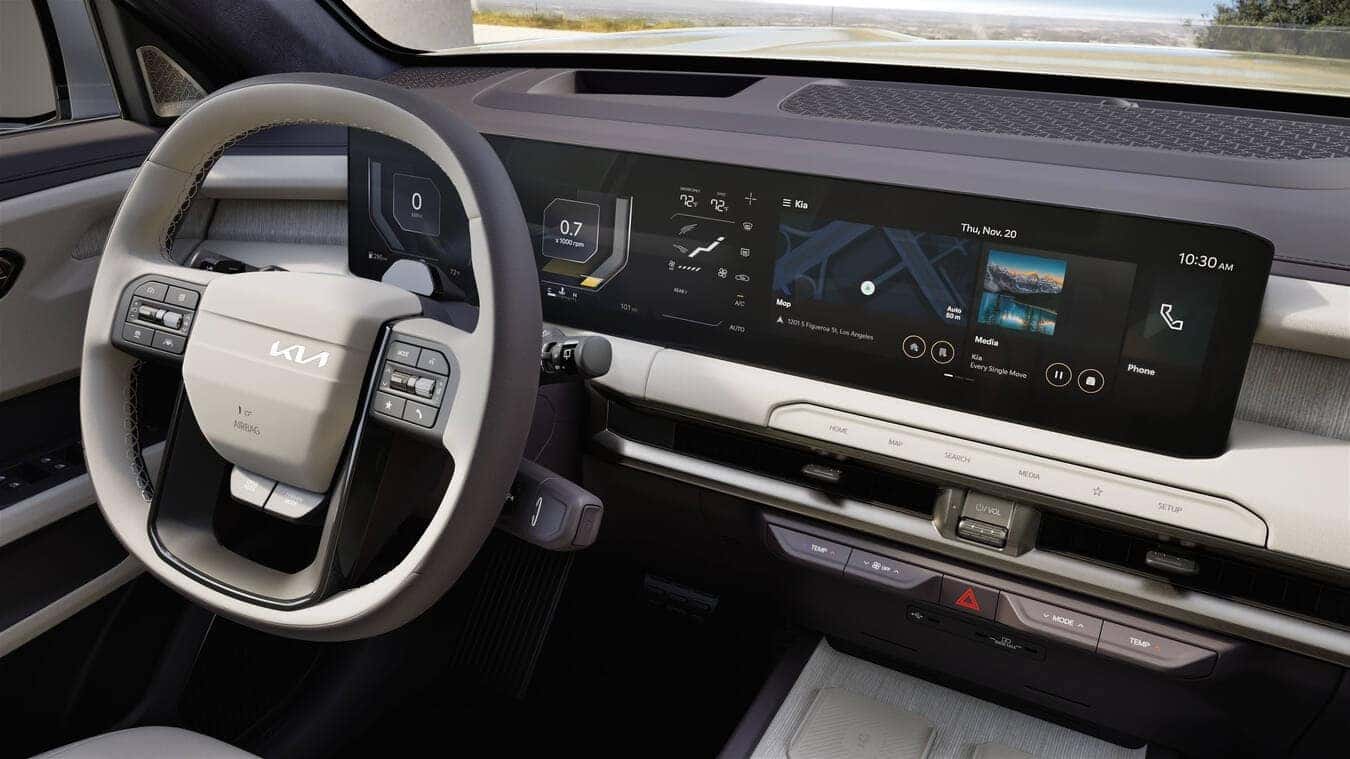
Table 4: Three-Row SUV Performance and Efficiency Matrix
| Performance Metric | 2027 Kia Telluride Hybrid | 2027 Kia Telluride Gas Turbo | 2026/2027 Toyota Highlander Hybrid |
|---|---|---|---|
| Powertrain | 2.5L Turbo I4 + Dual Electric Motors | 2.5L Turbocharged Inline-4 | 2.5L Naturally Aspirated I4 + Dual Motors |
| Total System Horsepower | 329 hp | 274 hp | 243 hp |
| Total System Torque | 339 lb-ft | 311 lb-ft | 180 lb-ft (engine only) |
| Transmission | 6-speed Automatic | 8-speed Automatic | eCVT (Continuously Variable) |
| 0–60 mph Acceleration | 6.4 seconds | 7.3 seconds | 8.2 seconds |
| Max Towing Capacity | 4,500 lbs | 5,000 lbs | 3,500 lbs |
| EPA Fuel Economy (AWD) | 30 / 32 / 31 mpg | 20 / 25 / 22 mpg (est) | 35 / 35 / 35 mpg |
| Real Highway Fuel Economy | 28 mpg (75 mph test) | 23 mpg (75 mph test) | 32 mpg (75 mph test) |
| Wheelbase / Length | 116.9 / 199.2 inches | 116.9 / 199.2 inches | 112.2 / 194.9 inches |
Crucial Comparison Takeaways:
- The Performance Gap: The 2027 Telluride Hybrid severely outclasses the Toyota Highlander Hybrid in pure driving dynamics. Boasting 329 horsepower and 339 lb-ft of torque paired with a traditional geared 6-speed automatic, the Telluride accelerates from 0–60 mph nearly 2 seconds faster than the Highlander Hybrid, which suffers from the sluggish, loud “rubber-band” acceleration of its eCVT.
- The Utility Trade-Off: The Telluride Hybrid retains a robust 4,500-pound towing capacity with standard integrated trailer wiring and self-leveling rear suspension. The Highlander Hybrid is limited to a light-duty 3,500 pounds, making the Telluride the superior choice for towing small watercraft to Lake Monroe or the St. Johns River.
- The Efficiency Trade-Off: The Highlander Hybrid is lighter and smaller, allowing it to achieve better real-world highway fuel economy (32 mpg vs the Telluride’s 28 mpg). However, the Telluride Hybrid compensates with a significantly larger cabin, featuring an adult-friendly third row and an extra 5 cubic feet of total passenger volume.
8. Preserving Exterior Integrity: The Florida Paint Defect Reality
A rising localized concern among Central Florida car buyers is premature paint finish failure—specifically clear coat separation, bubbling, flaking, and paint peeling off in large sheets. Multiple class-action investigations and lawsuits have been initiated against several manufacturers, including Kia and Hyundai, focusing primarily on vehicles painted in “white” or “pearl white” finishes (such as Snow White Pearl or Glacial White Pearl).
The Science of Local Paint Failure
The intense Florida UV index, combined with high humidity and localized chemical contaminants, creates a highly destructive environment for automotive paint.
- The Root Cause: Independent body shops attribute the premature peeling to a manufacturing defect in the primer layer applied at the factory. Under intense heat, the primer fails to maintain adhesion to the underlying metal panels.
- The Lovebug Catalyst: Central Florida’s biannual lovebug seasons represent a major chemical hazard. Lovebug body fluids are highly acidic. If left on the vehicle’s hood or bumper under the direct sun, these acidic splatters quickly eat through the clear coat and accelerate paint peeling.
Understanding the Paint Warranty Fine Print
Dealership sales representatives often tell buyers that the exterior is covered by the brand’s legendary 10-year warranty. This is highly misleading.
- The Reality: The 10-year/100,000-mile warranty applies strictly to the powertrain.
- Paint Coverage Limits: Kia’s New Vehicle Limited Warranty covers paint defects for only 3 years or 36,000 miles (whichever occurs first).
- Exclusions: The warranty strictly covers manufacturing application defects (such as runs, thin paint, or overspray) and explicitly excludes scaling, fading, or peeling caused by environmental factors like bird droppings, lovebug damage, salt spray, or improper maintenance.
If a 4-year-old Telluride’s paint begins flaking on the roof or hood, the owner is typically left with a $3,000 to $7,000 professional respray bill out-of-pocket. At Greenway Kia North, we encourage buyers to thoroughly inspect the roof, hood, and door frames of any pre-owned vehicle prior to purchase and always protect their vehicle with a high-quality ceramic coating or paint protection film (PPF).
9. Comprehensive Frequently Asked Questions (FAQ)
A: The 2027 Telluride Hybrid is backed by Kia’s 10-year or 100,000-mile Hybrid Powertrain Limited Warranty. This covers the high-voltage battery pack against total mechanical failure and permanent capacity loss.
Kia guarantees the battery will maintain at least 70% of its original state of health (SOH) during this period. To prevent premature claims, Kia integrates a physical safety buffer into the battery chemistry. For example, if the physical capacity is 2.0 kWh, the vehicle’s software only allows the system to utilize 1.7 kWh, hiding the remaining 0.3 kWh as a buffer. As the battery cells naturally degrade due to heat and use, the software slowly draws from this hidden buffer, maintaining consistent dashboard range and performance for years. A warranty claim will only be approved if a certified Kia diagnostic computer scans the battery and confirms the SOH has dropped below the 70% threshold.
A: Yes. The 2027 Telluride Hybrid has a maximum towing capacity of 4,500 pounds (when properly equipped with a trailer brake controller). This is slightly lower than the 5,000-pound limit of the non-hybrid model due to the added weight and thermal management requirements of the hybrid powertrain.
For safe towing in Florida, we recommend choosing a model equipped with the factory towing package, which includes a heavy-duty cooling fan, an integrated Class III hitch receiver, a 7-pin trailer wiring harness, and a self-leveling rear suspension to maintain proper vehicle geometry when loaded.
A: This is caused by Radio Frequency Interference (RFI) from the high-density millimeter-wave (mmWave) 5G cellular antennas installed on the exterior of the Kia Center. These antennas operate at extremely high frequencies to support massive stadium crowds.
As your vehicle passes on the elevated I-4 flyover, your smartphone attempts an aggressive cell handoff to these antennas. This momentary network transition saturates your phone’s wireless transceiver, interrupting the 5GHz Wi-Fi link that transmits CarPlay or Android Auto data to the car’s dashboard. The definitive solution is to transition to a hardwired connection by plugging a high-quality USB-C cable directly from your phone to the vehicle’s media port, which completely eliminates wireless RFI dropouts.
A: Greenway Kia North operates under the “Longwood Standard” of upfront transaction integrity. Our baseline dealer/documentation fee is set at a highly competitive $399, which is $573 below the Florida average of $972. We do not require mandatory protection packages or pre-installed accessory markups on our vehicles.
Conversely, DeLand Kia charges an inflated $1,199 dealer fee (which is $228 *above* the state average), a $599 e-filing fee, and automatically tacks a $1,295 Appearance Package onto their new arrivals. This inflates their actual out-the-door transaction cost by thousands of dollars above MSRP before negotiation even begins.
A: No. Because the 2027 Kia Telluride Hybrid is a conventional hybrid (HEV) that does not plug in, it is not eligible for the former federal electric vehicle tax credits, nor does it qualify for Florida’s High Occupancy Vehicle (HOV) lane decal program, which is restricted strictly to Plug-in Hybrids (PHEVs) and Battery Electric Vehicles (BEVs).
However, because the Telluride Hybrid has no plug, it is completely immune to charging-infrastructure limitations and is highly resilient during long-distance travel and hurricane evacuations across the Florida peninsula.

0 comment(s) so far on The Redesigned 2027 Kia Telluride Hybrid: Real-World Florida Commuting vs. The Brochure